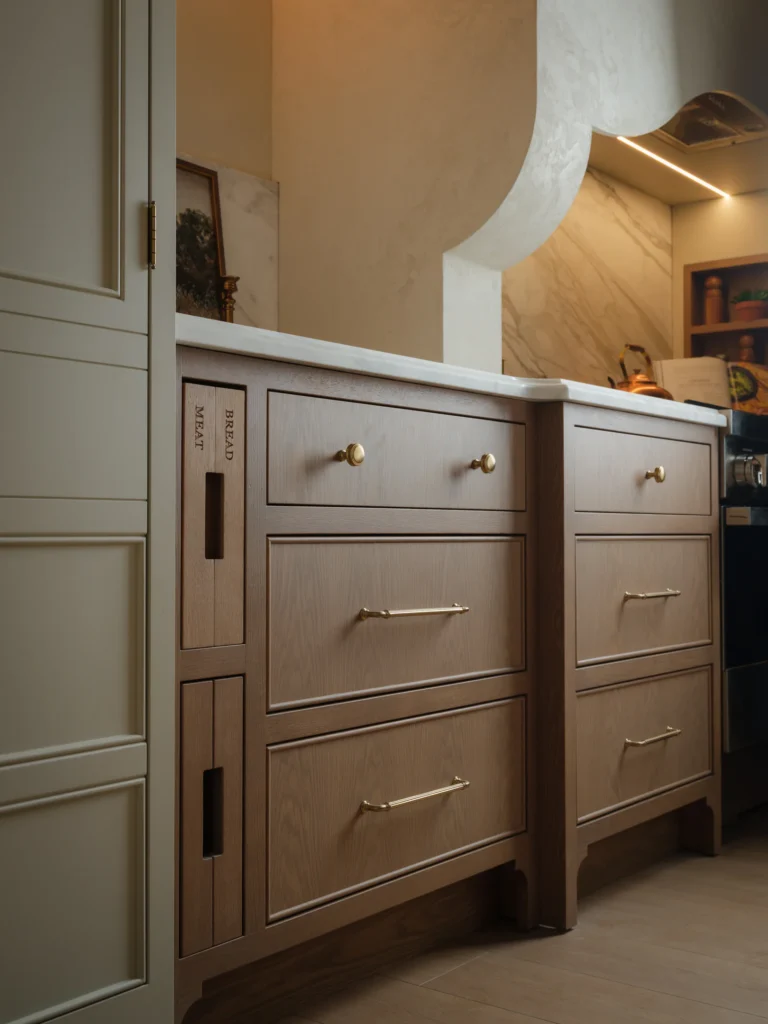
The colour of a kitchen is often the first thing we notice. Sometimes it is the stone, the hardware or the proportions of the island. But when you are investing in custom cabinetry, it pays to look a little closer.
In short, well-made face frame cabinets combine a sound cabinet body, a properly joined hardwood frame, accurately fitted doors and drawers, hardware suited to the opening, a durable finish and careful installation. Few of these can be judged from a photograph alone.
Much of the difference between two beautifully photographed kitchens becomes apparent only when you open the doors and examine the construction behind them. Here are the details we would encourage anyone considering face frame cabinetry to explore in a showroom.
Look at the complete elevation first
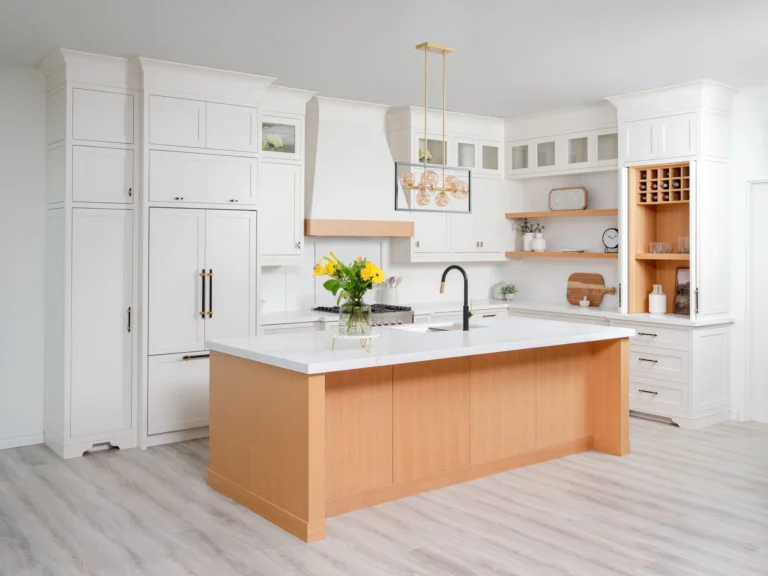
Stand back from the cabinetry and look at the relationship between adjacent doors, drawers and frame members. The framework should appear considered across the whole elevation rather than assembled from unrelated pieces.
Notice where the horizontal lines meet. A drawer rail may relate to the rail of a nearby cabinet or to another architectural detail. These relationships will not always be identical, nor should they be. What matters is whether the arrangement makes sense as a composition.
Then move closer. In a framed-inset kitchen, observe the narrow spaces around the fronts. A consistent reveal gives the framework a quiet, orderly appearance. An irregular gap may indicate an issue with fitting, adjustment or the opening itself, although a photograph alone is not sufficient to establish the cause.
Open the cabinet and examine its construction
Ask what the cabinet body is made from. A hardwood framework does not tell you what is behind it.
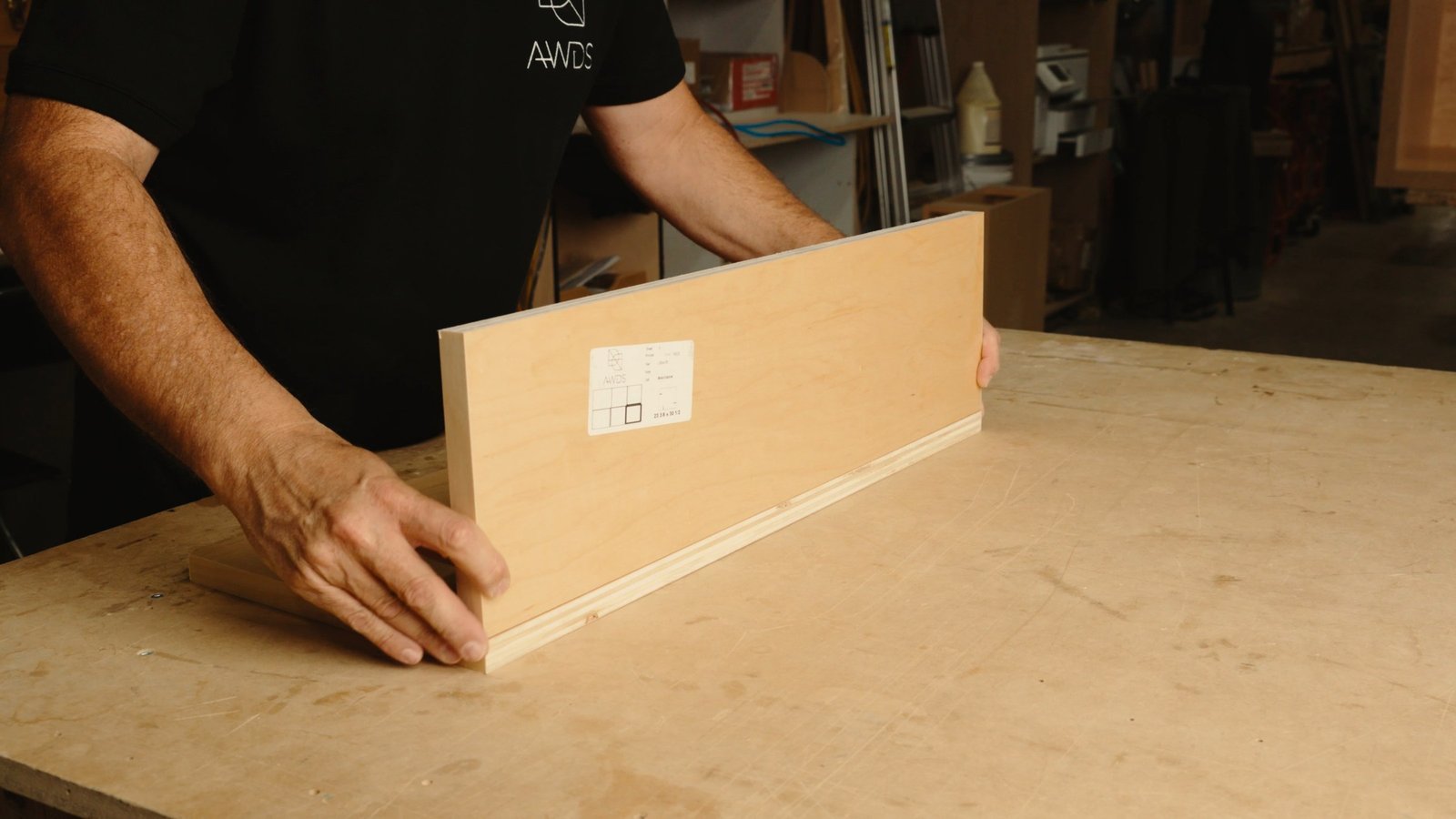
At AWDS, our standard cabinet carcasses are manufactured from ¾-inch formaldehyde-free domestic maple plywood, UV-coated on both sides. That is our own standard rather than a universal one. The construction of the carcass, including its joinery, support and connection to the face frame, is just as important as the visible door design.
It is also worth looking at the surfaces inside the cabinet. Are they appropriately finished? Are exposed edges treated? Does the cabinet feel considered in the areas you see only when a drawer or door is open?
A well-made cabinet should not rely on its exterior to create an impression of quality.
Understand the framework
Our typical face frames use solid hardwood stiles and rails 1½ inches wide and 7/8 inch thick. Where the construction calls for it, we attach the frame to the cabinet body with biscuit joints. These are working standards rather than fixed rules; other dimensions and joints may suit different applications.
Ask the cabinetmaker how the framework is joined and attached to the body. There is no single joint that establishes the quality of every cabinet. What you want to understand is whether the complete construction has been deliberately engineered for its intended use.
The way frames continue from one cabinet to the next is also worth examining. Where the design permits, a continuous framework can reduce the appearance of separate cabinet units and create a more furniture-like elevation. Look at the area between two adjoining doors. Is it a single shared member, or do two separately manufactured frames meet there? Our guide to continuous and individual face frames explains the difference.
Both constructions can be legitimate. They produce different visual results and have different manufacturing and installation requirements.
Pay attention to the things that move
Try opening drawers at different heights. Look at how they are constructed and how closely their hardware suits the space in which they operate.
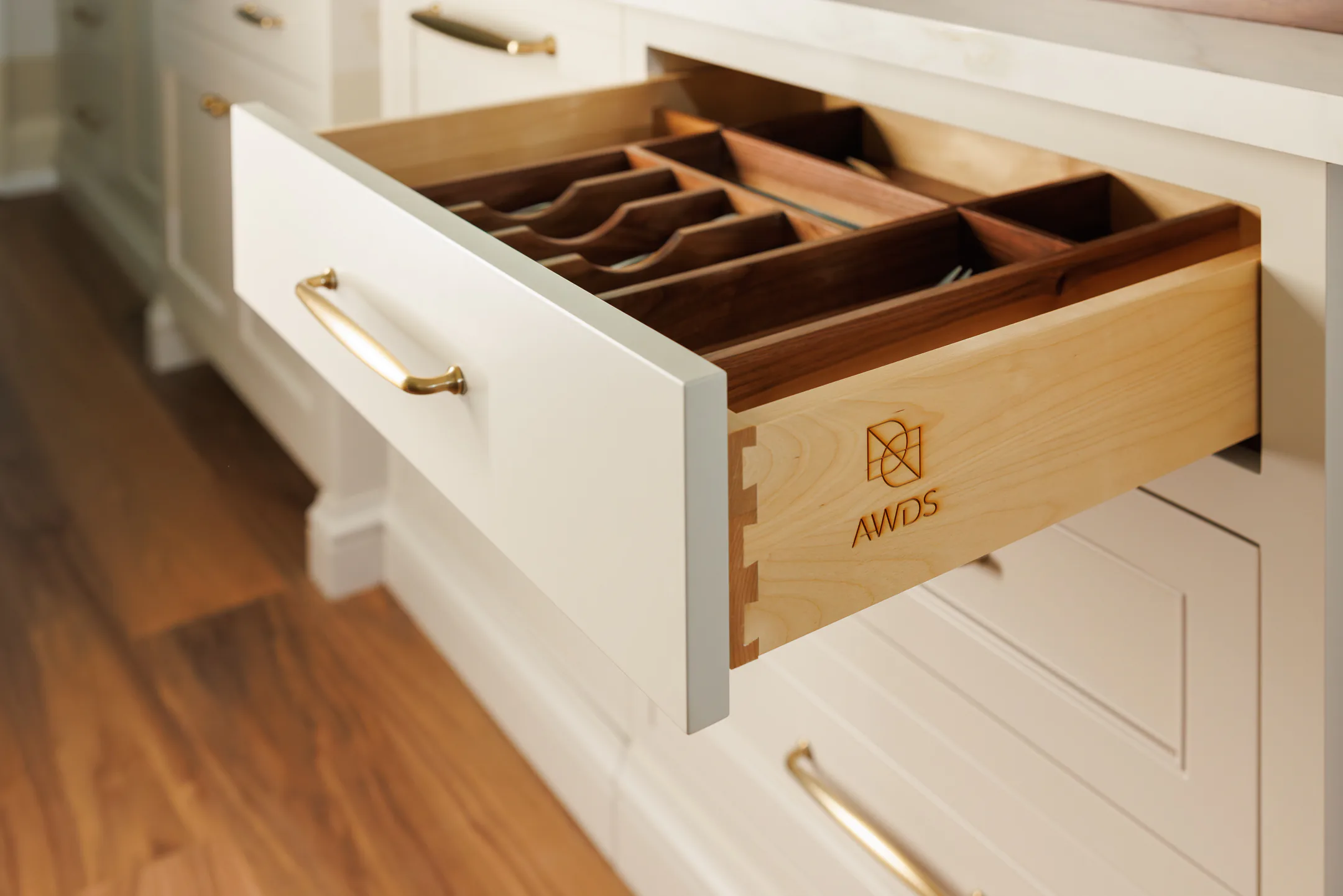
Our standard drawer options are solid maple dovetailed drawer boxes, which we run on Blum Movento undermount runners with Blumotion soft-close, or Blum Legrabox metal drawer systems. The specification follows the project. The advantage of a well-chosen drawer system is not just the way it feels on its first day. It is the ability to support everyday use and, where the hardware permits, make appropriate adjustments as required.
A dovetail joint is an attractive indication of a particular method of joinery, but it is not a substitute for considering the drawer bottom, dimensions, runner specification and installation.
The same principle applies to hinges. A beautifully finished door is of little use if it cannot swing freely or if its position is difficult to maintain.
Examine the finish under different light
Natural light can reveal details that are difficult to see under showroom spotlights. Look along the surface of a painted door rather than only directly at it. Examine corners, profiles and edges.
For stained cabinetry, consider how the grain and colour relate between adjoining members. Some natural variation is part of the appeal of timber. The aim is not to make wood look artificially uniform, but to handle those variations thoughtfully.
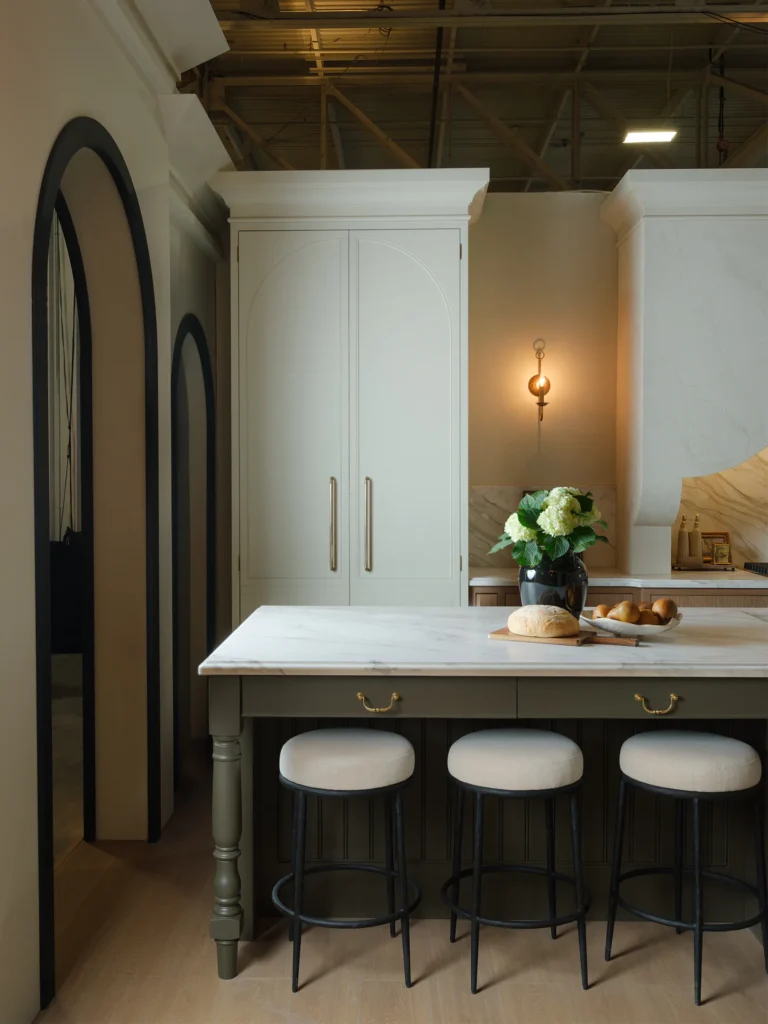
Ask what finishing system is used and how it should be cared for. Our painted cabinetry uses a multi-stage Italian polyurethane system applied in our own spray facility. A useful conversation about finishes includes their limitations, not simply a description of how durable they are.
Find out who is responsible for the finished kitchen
Cabinet quality is not determined at the factory alone. The installation has to preserve the alignment and proportions established during manufacturing.
Ask who prepares the technical drawings, who carries out the manufacturing, who installs the cabinets and who takes responsibility if an adjustment is required after installation. These questions are particularly relevant to inset cabinetry, where design and fitting are so closely connected.
At AWDS, our design, engineering, manufacturing and finishing are carried out in-house, and our own installation team completes the cabinetry on site, as our process describes. Our cabinetry is backed by a lifetime craftsmanship warranty on its construction and a two-year warranty on painted finishes, subject to their applicable terms, which our FAQ summarises.
If you visit our showroom in Caledon, we welcome questions about the details that are not always visible in completed project photographs. It is a useful opportunity to understand what you are commissioning before making decisions about colour, hardware and investment.